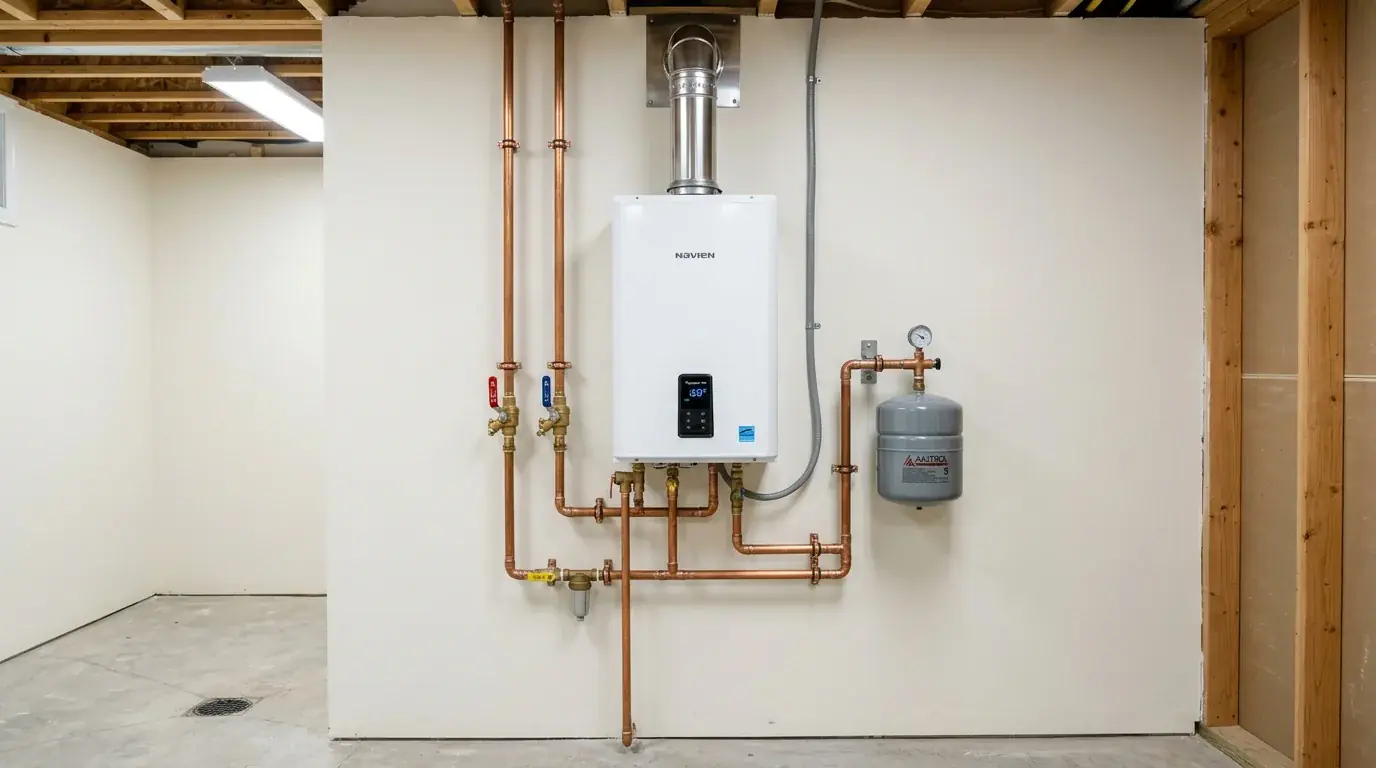
Complete tank and tankless water heater diagnostics, gas valve replacement, electric heating element testing, anode rod service, and system replacements.
Domestic hot water heaters endure harsh continuous thermal cycles, heavy mineral sediment collection, and internal galvanic tank corrosion. When showers run cold, relief valves discharge scalding water, or rumbling noises echo during heating cycles, prompt technical diagnosis prevents total rupture. Plumbers service all configurations, including atmospheric gas, power-vent, electric storage tanks, and high-efficiency on-demand tankless units. Technicians measure heating element resistance with digital ohmmeters, test thermocouple millivolts, inspect burner chambers, and evaluate expansion tanks. If tank decay or severe inner liner cracking makes replacement necessary, technicians guide homeowners toward properly sized, energy-efficient replacements that ensure uninterrupted domestic comfort.
Common Plumbing Symptoms Requiring Attention
Observed Issue: Showers run lukewarm or turn freezing cold within minutes of starting.
Observed Issue: Loud popping, knocking, or rumbling noises echo inside the tank during heating.
Observed Issue: Rusty, discolored water with a metallic taste pours from domestic hot taps.
Observed Issue: Temperature and pressure relief valve drips water continuously down the discharge pipe.
Observed Issue: Standing water gathers beneath the water heater outer jacket base.
Diagnostic Procedures & Technical Standards
Technical Protocol: Multi-point ohmmeter resistance diagnostics across electric upper and lower elements.
Technical Protocol: Combustible gas sniffer checks and electronic millivolt thermocouple testing.
Technical Protocol: Thermal expansion tank pressure calibration matching incoming municipal supply PSI.
Technical Protocol: Sediment flush procedures and sacrificial magnesium anode rod replacements.
Frequently Asked Questions: Water Heater Repair & Installation
Lukewarm water typically indicates that the lower electric heating element or its controlling thermostat has failed. The upper element continues heating the top third of the tank to satisfy thermostat limits, leaving the bottom cold and drastically slashing total available hot water volume.
Flushing storage tanks every twelve months removes accumulated calcium carbonate and lime scale before it hardens into an insulating rock layer across the bottom. Regular flushing prevents element burnout, maintains burner heat transfer efficiency, and prolongs tank longevity substantially.
Discharging relief valves must never be capped or plugged, as they represent the primary safety mechanism preventing explosive tank over-pressurization. Technicians replace failing valves, verifying that high domestic water pressure or thermal expansion isn't triggering the safety discharge prematurely.
Defective thermocouples, oxidized pilot orifice tubes, or weak gas control magnet assemblies prevent pilot valves from remaining open. Excessive chimney downdrafts or obstructed intake flame arrestor screens can also starve burner assemblies of necessary combustion air.
Tankless units require instant firing inputs between 150,000 and 199,000 BTUs, compared to only 40,000 BTUs for standard storage tanks. Upgrading gas supply lines from half-inch to three-quarter or one-inch pipe is commonly required to ensure adequate operating pressure during peak demand.
Plumbers unscrew the hex-head anode rod using an impact wrench to inspect remaining metal thickness. When the magnesium core has dissolved down to its central steel wire, the tank interior begins corroding rapidly, necessitating immediate rod replacement to preserve tank life.
Heaters past eight to ten years with active tank jacket leaks or severe bottom rust generally warrant complete replacement rather than costly part repairs. Minor repairs like heating element or thermostat replacements remain economical if the steel tank lining remains structurally sound.
Trapped water boils underneath dense mineral sediment strata accumulated across the tank bottom, creating miniature steam pockets that violently bubble up through sludge. This cavitation noise strains the steel tank shell and severely reduces thermal fuel efficiency.
Request Water Heater Repair & Installation
Speak with our technical dispatch team for prompt diagnostic scheduling and itemized plumbing repair estimates.
Do not let minor pipe leaks turn into ruined subflooring or emergency sewer backups. Speak with our dispatchers for clear pricing and prompt technical scheduling.